 English
 Español
  Português
  русский
  Français
  日本語
日本語  Deutsch
  tiếng Việt
  Italiano
  Nederlands
  ภาษาไทย
  Polski
  한국어
한국어  Svenska
  magyar
  Malay
Malay  বাংলা ভাষার
  Dansk
Dansk  Suomi
Suomi  हिन्दी
  Pilipino
  Türkçe
  Gaeilge
  العربية
  Indonesia
  Norsk
Norsk  تمل
تمل  český
český  ελληνικά
  український
  Javanese
  فارسی
فارسی  தமிழ்
தமிழ்  తెలుగు
  नेपाली
  Burmese
  български
  ລາວ
ລາວ  Latine
  Қазақша
  Euskal
  Azərbaycan
  Slovenský jazyk
  Македонски
  Lietuvos
  Eesti Keel
  Română
  Slovenski
  मराठी
मराठी  Srpski језик


Which Screws and Bolts Actually Save Time On Site and Money Over a Project?
I spend most days bridging drawings and jobsite realities, so I judge fasteners by how they behave under a wrench, in rain, and after a season of vibration. That is exactly why I work with Wisdom—the brand that keeps proving small parts aren’t small decisions. If you are choosing Screws and Bolts for production lines, field installs, or maintenance rounds, the right spec prevents seized threads, creep, galvanic bite, and costly rework. In this guide I’ll share the selection logic and field checks I use, phrased as practical questions you can bring to your next purchase of Screws and Bolts.
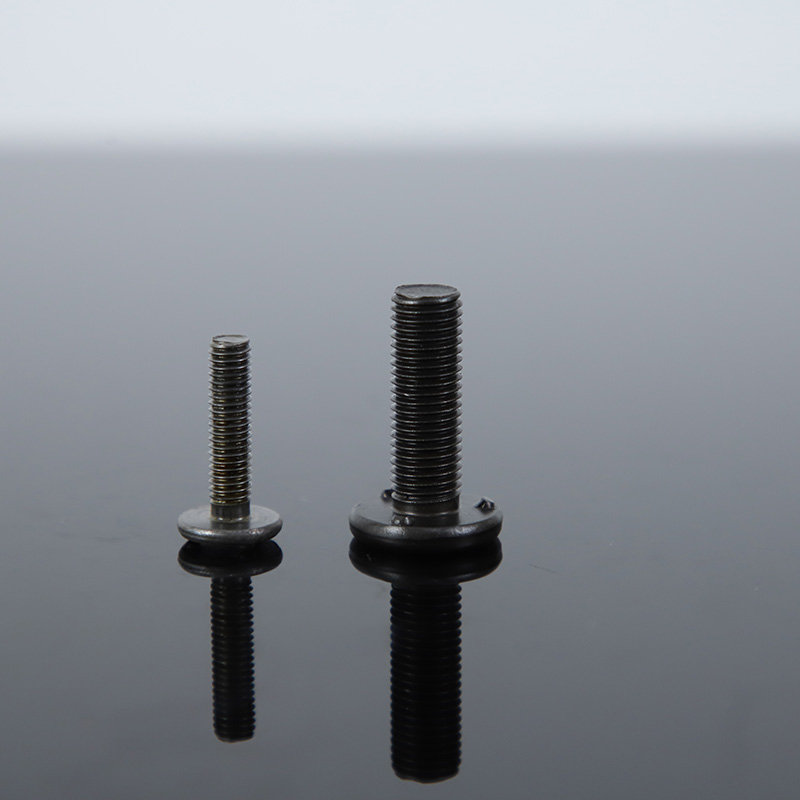
How do I match application loads with the correct thread and head without over-engineering?
- Tension vs. shear: For pure tension, go fine thread for higher root area and better preload control; for mixed shear and fatigue, use coarse thread to resist galling and ease field assembly.
- Head style: Hex and socket cap maximize torque transfer; pan, truss, and button reduce snag points in assemblies people touch; countersunk spreads clamp force flush to surfaces.
- Drive choice: Torx/hex socket reduce cam-out and bit wear on high-volume lines; Phillips remains service-friendly for after-sales kits.
- Shank and point: Rolled threads improve fatigue life; self-drilling points speed through light-gauge steels; self-tapping flutes cut into plastics and thin metals without nuts.
When I spec Screws and Bolts for mixed substrates (steel frame to aluminum panel), I also add an insulating washer or finish pairing to cut galvanic risk.
Which material and finish combinations keep corrosion from eating my margins?
- Carbon steel + zinc: Cost-effective indoor use; choose trivalent passivation for better salt-spray hours.
- Carbon steel + mechanical galvanizing: Thick, even coating for structural bolts where thread fit matters.
- Alloy steel + black oxide: Clean look for dry interiors; not a corrosion coating—use only with oil film and service plans.
- Stainless 304/316: Food/chem and coastal; 316 handles chlorides better. Use anti-seize to prevent galling under high preload.
- Bi-metal fasteners: Stainless head with hardened carbon-steel drill point for roofing skins—drills fast and survives weather.
For exterior work, I’ve seen Screws and Bolts last dramatically longer when the finish matches the environment, not the catalog photo.
What grades and proofs do I need to control clamp load and avoid bolt stretch?
- Metric: 8.8 for general structural steel, 10.9 for automotive frames and machinery, 12.9 for compact, high-strength joints with verified torque-to-tension control.
- Imperial: Grade 5 for general machines; Grade 8 when you need higher proof load with careful joint design and hardened washers.
- Stainless: A2-70 for most assemblies; A4-80 where both salt and strength matter.
With critical Screws and Bolts, I specify lubricated torque or, better, angle tightening with tested K-factor so preload isn’t guesswork.
Why do joints loosen and how do I stop it before the call-back?
- Insufficient preload: Use calibrated tools and torque-angle; verify with tension indicating washers in training builds.
- Embedment and creep: Add hardened washers; avoid soft washers under high clamp loads.
- Vibration: Use prevailing-torque nuts, serrated flanges, thread-locking patch, or chemical threadlocker matched to service temp.
- Thermal cycling: Choose materials with compatible expansion; in mixed materials, re-check after heat soak.
Which quick comparison helps my team choose faster on RFQs?
| Type | Best For | Common Grades | Typical Finish | Notes |
|---|---|---|---|---|
| Hex Bolt | Structural steel, machinery frames | 8.8 / 10.9 / Grade 5 / 8 | Zinc, HDG | Use hardened washers; verify hole tolerance |
| Socket Cap Screw | Compact, high-strength joints | 10.9 / 12.9 | Black oxide, phosphate | Watch for galling; torque-angle preferred |
| Self-Drilling Screw | Light-gauge steel, roofing skins | Case-hardened carbon steel | Zinc-aluminum, bi-metal head | Check drill capacity vs. substrate stack |
| Stainless Machine Screw | Food/Chemical, coastal installs | A2-70 / A4-80 | Plain stainless | Use anti-seize; consider nylon insert nuts |
| Carriage Bolt | Timber connections, guardrails | 4.6 / 8.8 | Zinc, HDG | Dome head is tamper-resistant; square neck bites wood |
How do I audit quality quickly without slowing my line?
- Certificates that matter: Ask for heat lot traceability and mechanical test reports aligned to the ordered standard.
- Thread and drive fit: Run GO/NO-GO gauges; test 10 random pieces per lot for bit engagement and wobble.
- Coating thickness: Measure a few parts by magnetic gauge; look for even coverage at thread roots and under heads.
- Salt-spray vs. real life: Treat hours as comparative, not absolute; field exposure and design still rule.
What sourcing pitfalls cost me most and how do I dodge them?
- Mislabeled grade: Visual stamps can lie; confirm by third-party tensile test for critical lots.
- Mixed finishes in the same box: Adds galvanic risk and uneven appearance; insist on tight packing control.
- Uncontrolled lubrication: Oily parts shift torque-tension; either clean and dry or specify a consistent lubricated K-factor.
- Non-standard threads: Lock your BOM to ISO/ASME thread forms to protect future maintenance sourcing.
When I review suppliers for Screws and Bolts, I prioritize stable metallurgy, coating control, and packaging that survives transit without chipping finishes.
Why do I keep coming back to a single brand for critical builds?
The short answer is repeatability. With Wisdom, batches of Screws and Bolts arrive with consistent thread rolling, clean head forging, and coatings that match the spec sheet numbers. That predictability lets my teams tighten once, verify once, and move on—no drama, no returns.
Which checklist helps my crew choose the right Screws and Bolts under pressure?
- Define load path and required preload, then choose grade (8.8, 10.9, 12.9 or stainless class).
- Pick thread pitch for assembly reality—fine for control, coarse for speed and dirty sites.
- Match finish to environment—interior zinc, exterior HDG or 316 stainless.
- Plan anti-loosen strategy—mechanical (flange/nylon) or chemical threadlocker.
- Freeze torque method—dry vs. lubricated—and train on torque-angle where feasible.
Follow that list and your Screws and Bolts stop being a risk line and start acting like the insurance they should be.
How can we help you spec, sample, and scale without friction?
If you want samples, joint design advice, or a rapid quote for your next run of Screws and Bolts, my team at Wisdom keeps lead times tight and documentation clean. Tell me your environment, load targets, and assembly method, and I’ll recommend a validated set—fasteners, washers, nuts, and finish—so your first article passes the shake-down. Send your drawings or BOM and contact us now to get engineering feedback and a tailored quotation for Screws and Bolts. If you prefer starting with a quick consult, just say hello—I’ll reply with options, MOQs, and sample timing so you can move.
Send Inquiry



X
We use cookies to offer you a better browsing experience, analyze site traffic and personalize content. By using this site, you agree to our use of cookies.
Privacy Policy